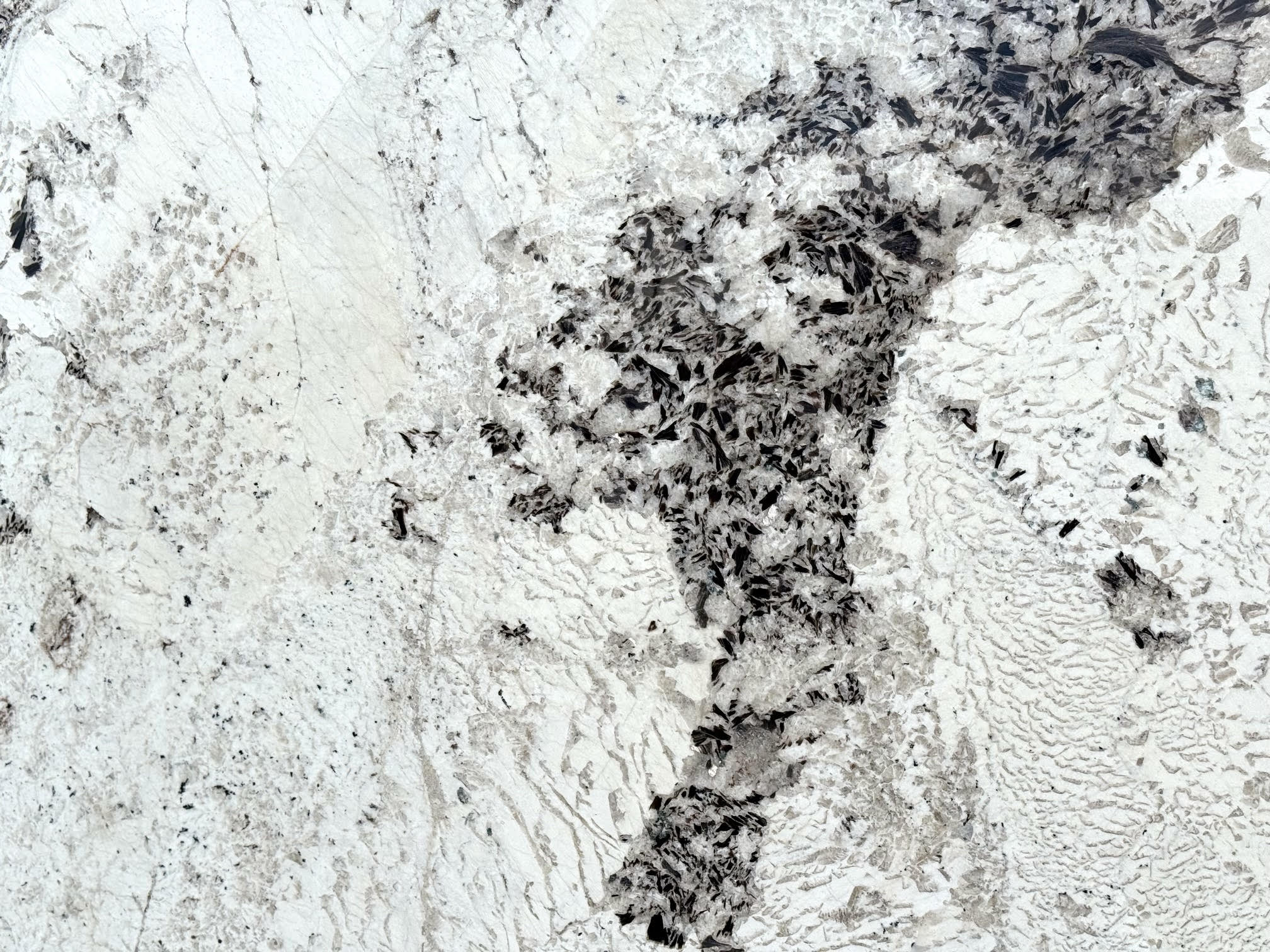

A line across a granite slab can raise a fair question: is it a natural fissure or real damage? The answer matters before a fabricator cuts a sink opening, shapes an edge, or moves the slab.
The Natural Stone Institute uses “fissure” for a natural separation along crystal boundaries. Its countertop guidance links a crack with mechanical stress during handling, fabrication, transport, or installation. A fissure may appear elsewhere in the same slab or in other slabs of the same stone.
For buyers who plan to inspect granite slabs Houston, a visual check works best as part of a wider review. A fabricator or stone specialist can judge any line near a sink cut, edge, seam, or overhang.
Terra Granite’s Granite collection lists 28 products and offers filters for stock size, thickness, origin, finish, and color. A yard visit connects those details with the exact slab.
Granite Fissure vs Crack: What the Difference Means
The granite fissure vs crack question begins with origin. The Natural Stone Institute describes a fissure as a natural separation along crystal boundaries in stone. Geologic forces form it before the slab reaches a warehouse. The same material may show related lines in more than one area.
A crack has another cause. The Natural Stone Institute links cracks with mechanical stress from handling, fabrication, transport, or installation. A crack may signal damage that needs review before a shop cuts or installs the piece.
Color alone does not settle the question. A dark line may follow a mineral change. A pale line may form part of the natural structure. Touch, edge condition, depth, location, and pattern give better clues.
Natural stone also carries small pits, crystal changes, filled areas, and mineral marks. The Natural Stone Institute notes that many granite slabs receive resin treatment at the factory to fill micro-fissures and small indentations.
A useful first review asks:
- Does the line follow the mineral pattern?
- Does a similar line appear nearby?
- Does the surface feel level across the line?
- Does the line reach a slab edge?
- Does the line pass through the full depth?
- Will a sink, hob, seam, or edge fall near it?
These questions support natural granite inspection without treating every natural mark as damage. They also help separate granite fissures from areas that need expert review. A fabricator should judge any doubtful line, since the cut plan changes how much a given area matters.
How to Inspect Granite Slabs Houston Buyers See at a Slab Yard
A good inspection uses distance, close viewing, touch, and side light. From several feet away, the buyer sees the main color flow. Up close, fine lines, pits, crystals, filled spots, and edge details become easier to see. Side light can reveal a change in surface level.
The Natural Stone Institute’s stone-shopping guidance points to surface feel, full-depth fractures, edges, and overhang zones as useful checks. It also says weaknesses matter most during fabrication, transport, and installation.
A practical granite quality checklist covers:
- Face condition under direct and side light.
- Top and bottom edges near visible lines.
- Any line that reaches a corner.
- Any open gap that catches a fingernail.
- Filled zones and their location.
- Areas near planned sink or hob cuts.
- Narrow strips beside cutouts.
- Planned overhangs and support areas.
- Slab thickness and usable dimensions.
- Matching pieces for a multi-slab job.
Dark polished stone gives a useful example. Terra Granite lists Black Galaxy Granite with polished slab options in 2 cm and 3 cm. A dark polished face can make reflection useful during a visual review.
The goal of how to inspect granite slabs is not a perfectly uniform rock. Natural stone has variation. The goal is to understand the exact piece and flag any area that could affect cutting, support, or the finished look.
A buyer can also compare nearby slabs of the same material. Repeated mineral lines may help show natural structure. One isolated open break needs closer review. The yard team and fabricator can explain any filled spot or unusual edge.
Granite Slab Cracks Near Edges, Cutouts, Seams, and Overhangs
Location changes the risk of a line. A natural feature in the middle of a wide, well-supported counter poses a different question from a line close to a sink rail or narrow edge.
Sink and hob openings remove large sections of stone. The remaining strips carry less material across the opening. The Natural Stone Institute says stone with large areas removed, such as sink cutouts, may benefit from reinforcement. Its countertop guidance also discusses fiberglass mesh and other methods for vulnerable areas.
For granite slab cracks, close review matters near:
- Sink corners and narrow rails.
- Hob corners.
- Faucet holes.
- Long overhangs.
- Outer slab corners.
- Planned seams.
- Thin strips between two cutouts.
- Areas that a fabricator must lift during transport.
Strong pattern can make inspection harder. Mineral movement may cross the slab in several directions. Terra Granite’s Typhoon Bordeaux Granite shows deep red, brown, cream, and gold movement on a polished surface. A stone with broad color changes calls for a slow review so a buyer can tell pattern from an open break.
A fabricator may place a cut away from a questionable zone when enough usable area remains. A cut map shows where each counter piece will come from.
This point matters during buying granite slabs Houston. A slab may look striking, yet the job still needs safe cut positions and enough stone around openings. A good inspection links the natural pattern with the final layout.
A Granite Slab Buying Guide for the Final Yard Review
The last review brings appearance, structure, size, and fabrication into one plan. The buyer can match the slab tag with the job details, then review marked areas with the fabricator or yard team.
Terra Granite’s classic granite page lists 2 cm and 3 cm filters, polished and leather finishes, and many stock sizes. The page also lists its slab center at 12642 Hempstead Road in Houston.
A dark stone such as Black Pearl Granite also shows why exact inventory matters. Terra Granite lists polished 2 cm slabs plus other finish or thickness entries on the product page. Its description notes a dark field with metallic-looking flecks. A buyer should judge the real slab rather than rely on one screen image.
A final granite slab buying guide can use this list:
- The slab tag matches the chosen piece.
- The dimensions cover the cut plan.
- The thickness fits the fabrication plan.
- The finish matches the room design.
- The buyer has reviewed the face and edges.
- Any doubtful line has a specialist review.
- The fabricator knows where major cutouts will go.
- Matching slabs work together in tone and pattern.
- The seam plan avoids weak or awkward areas.
- The buyer understands filled zones and natural variation.
- The hold covers the exact slab or slab set.
This approach keeps natural stone slab defects separate from normal stone character. It also makes a Houston granite slab yard visit more useful. The buyer leaves with a clear record of the chosen piece, not just a stone name.
FAQs About Granite Fissures and Cracks
1. What is the main difference between a granite fissure and a crack?
A fissure forms naturally along crystal boundaries in stone. A crack comes from mechanical stress linked to handling, cutting, transport, or installation.
2. Are granite fissures normal in natural stone?
Yes. Many stone types show natural fissures. A fabricator should still review a fissure near an edge, cutout, seam, narrow rail, or planned overhang.
3. Does every visible line mean a granite slab has damage?
No. Mineral changes, natural fissures, filled areas, and pattern lines can all appear on granite. Surface feel, depth, location, and edge condition give better clues.
4. How can side light help during a granite slab inspection?
Side light can reveal changes in surface level, polish, filled spots, and open lines. A low viewing angle also makes small steps or gaps easier to notice.
5. Should a buyer reject a slab with a natural fissure?
A natural fissure does not make a slab an automatic reject. Its position, depth, support, cut plan, and fabricator review matter more than the line alone.
6. Why do sink and hob areas need closer inspection?
Large cutouts leave narrow stone rails around the opening. Lines near those zones deserve close review since the shop must cut, move, and support those sections.
7. Can resin appear on a natural granite slab?
Yes. Stone processors often use resin to fill micro-fissures and small natural surface traits. A buyer can ask the slab yard about any visible filled area.
8. Should matching slabs receive the same inspection?
Yes. Each natural slab has its own pattern and marks. A buyer should review every piece planned for one job, mainly near seams and major counter cuts.
9. Can a photo replace an in-person granite slab review?
A photo helps with color and broad pattern. A yard visit gives a better view of surface feel, edges, filled areas, reflections, fine lines, and exact condition.
10. Who should judge a doubtful line before a granite purchase?
A qualified fabricator or stone specialist should review a doubtful line and relate its location to cutting, transport, support, seams, and installation.
Terra Granite and Natural Granite Inspection in Houston
A clear granite fissure vs crack review begins with one fact: natural fissures and mechanical cracks have different origins. Buyers do not need to treat every visible line as damage. The slab still deserves a careful face, edge, light, and layout review.
For buyers planning to inspect granite slabs Houston, the best review connects the stone with the fabrication plan. Sink cuts, seams, narrow rails, overhangs, and transport all affect how a questionable area should be judged.
Terra Granite offers granite and other natural stone at its Houston slab center. Buyers can visit our page at Terra Granite to view the current granite range and plan a closer slab review.