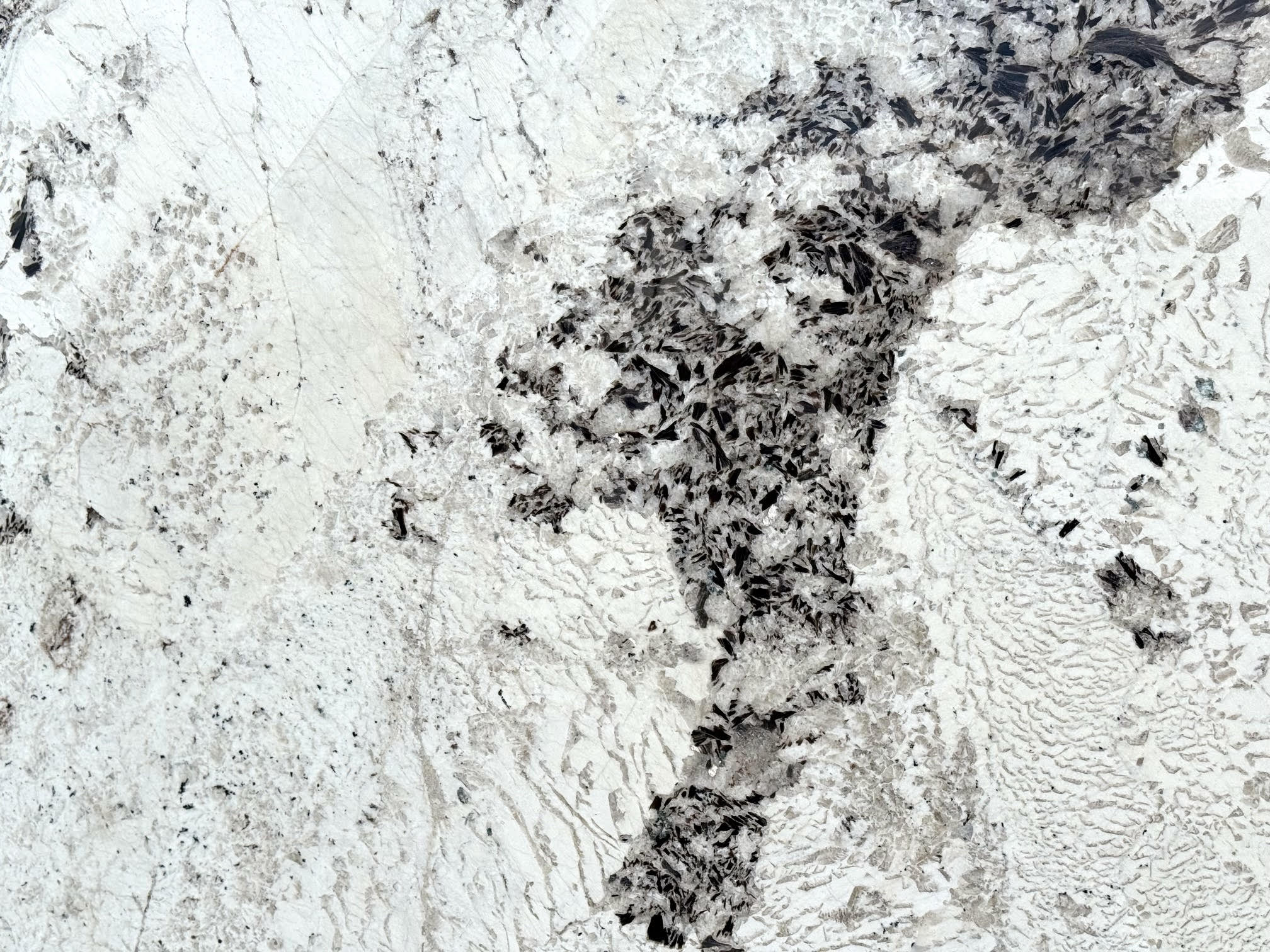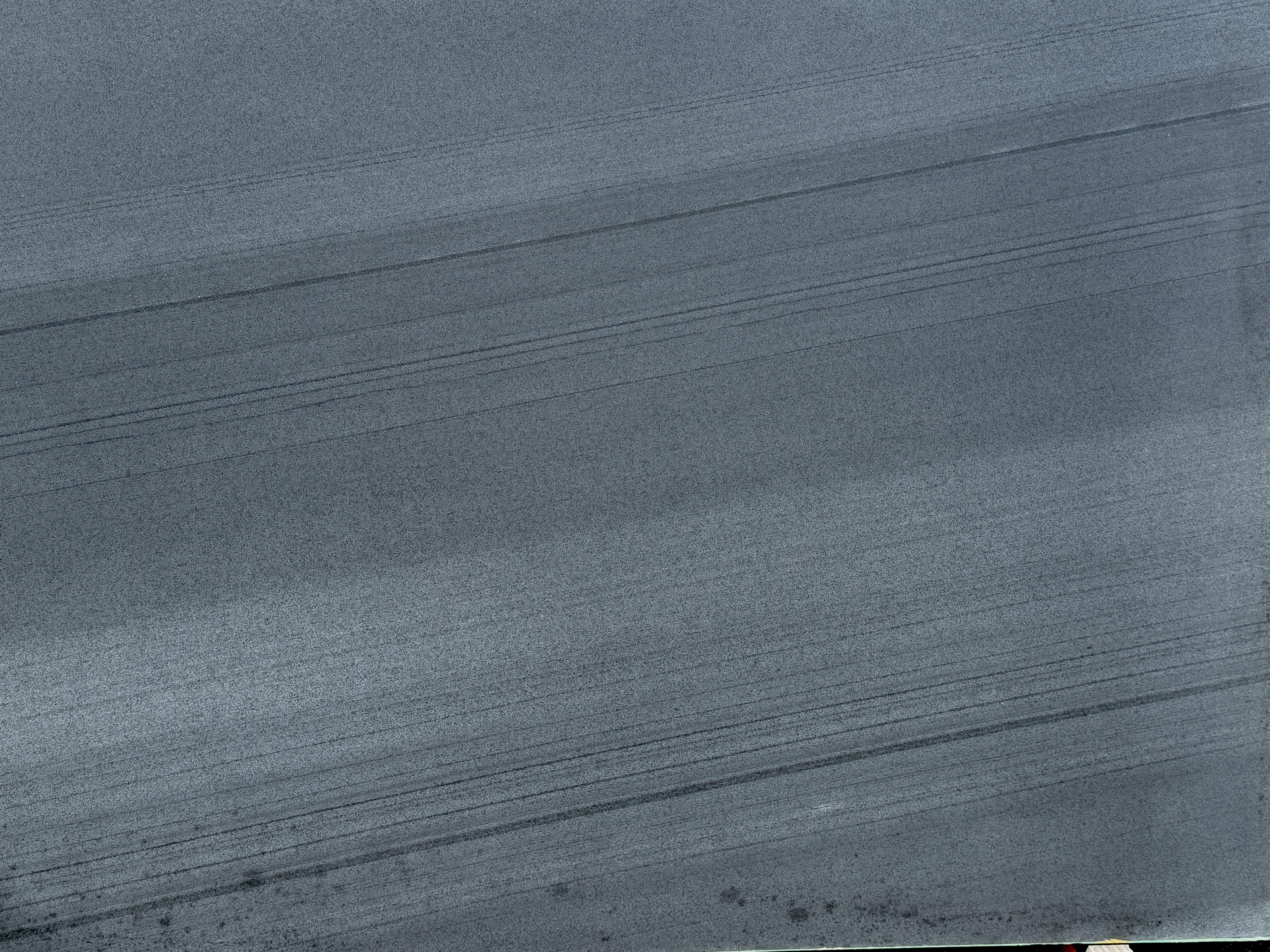

Two stone panels meet at the centre of a wall. A dark vein runs left, then seems to turn back on the right. From across the room, the pair looks like one grand design. Up close, the thin join and small shifts in colour tell a more natural story.
That is the appeal of bookmatched exotic granite. Two slabs can form a striking mirror pattern, but they cannot promise an exact copy. The stone comes from the earth, not a printer. Its veins can change between two cuts, even in the same block.
A true bookmatch also needs more than two slabs with the same sales name. The pair must come from nearby cuts, and the right faces need the right finish.
At Terra Granite, we offer a wide choice through our exotic granite collection. Our collection gives buyers a way to explore patterns. It does not mean each stone has a matching pair on hand. For a Houston project, the real task is finding two suitable faces and planning where their shared line will go.
The Mirror Begins Inside a Single Block
A bookmatch begins long before the stone reaches a kitchen or wall. At the processing plant, a saw cuts a large rock block into thin slabs. Each new slice reveals veins that ran through the same mass of stone.
Two neighbouring slabs share a close pattern. The saw leaves one face on each side of the cut. A stone processor can polish those two facing surfaces and turn them outward. Set the panels side by side, and their veins appear to reflect across the join.
This is how bookmatched stone slabs are cut and prepared. The two polished faces matter as much as their place in the block. A supplier may offer consecutive slabs that both have polish on the same side. That pair may not create a true mirror.
The basic steps explain why the slab history matters:
-The saw cuts one block into a run of slabs.
-Two neighbouring cut faces carry close mineral patterns.
-The processor finishes the faces that once faced each other.
-The two panels open out across a shared centre line.
-The fabricator plans the cuts around that line.
The term consecutive stone slabs from one block tells part of the story. It does not prove that both visible faces suit a bookmatch. A real match needs the right pair, the right finish and enough stone for the job.
Why an Almost Perfect Match Is More Realistic
A photo editor can copy one slab image and flip it. Both halves will match down to the smallest mark. Real stone does not work that way.
The saw removes a thin strip of rock at each cut. Veins can bend, split or fade across that small gap. A pale line on one face may look a little wider on the next. A dark patch may move a short distance.
That is why the answer to can two granite slabs mirror exactly is no in a strict sense. The Natural Stone Institute notes that neighbouring stone faces can show natural differences. Bookmatching aims for close visual balance, not exact geometry.
The centre line also remains a physical joint. Skilled cutting and fitting can make it neat. They cannot turn two solid pieces into one unbroken slab. Light may catch the seam at some angles, even when the veins meet well.
Several things can affect the final match:
-Veins change shape between the two cut faces.
-Chips or weak edges may call for extra trimming.
-Polishing may bring out colour in slightly different ways.
-Cut-outs can take away a key part of the pattern.
-The room's light can make one half look brighter.
A close mirror with slight natural shifts can still feel calm and balanced. A promise of perfect symmetry sets the wrong test for genuine stone.
The Best Pattern Is Not Always the Best Pair
Fine, even specks may show little change when two panels meet. Strong lines give the eye a path across the centre. Yet a bold product photo does not prove that a matching pair exists.
Our River Blue stone has grey and brown waves that show the kind of movement buyers may seek. Our product page describes River Blue as a hard marble. Its trade placement in our exotic range does not change that detail. Nor does the page claim a ready bookmatched pair.
Do the lines run near the edge? Do they open toward the centre? Will a sink or socket cover the best part? These questions tell more than the colour name.
For bookmatched granite slabs, the pair check goes beyond style:
-Both slabs should come from a suitable cut sequence.
-Their finished faces must create the mirror effect.
-The pair must offer enough width and height after trimming.
-The grain and major veins must suit the planned view.
-Each panel needs a sound edge along the shared join.
A supplier may have several slabs with one name but no true bookmatch. Two slabs from different blocks may share a colour yet lack the same vein path. The granite slab pair availability in Houston must relate to the exact pieces, not just a catalogue listing.
The Room Can Change How the Mirror Looks
The same pair can look quite different on a wall and on a counter. A tall wall puts the full pattern at eye level. A kitchen island places much of the stone below the viewer's line of sight. A low cabinet, large sink or open shelf can break the shape.
A natural stone feature wall often gives a bookmatch room to show its full width. A fireplace wall can also work, as long as openings leave enough stone on both sides. The fabricator must still assess the stone for that use.
Our Titanium Gold granite has dark tones and gold movement. That type of contrast can make a centre design easy to see. It does not mean our current Titanium Gold slabs form a matched pair. The actual faces must settle that question.
A bookmatch granite island layout may call for a different aim. A waterfall end often looks best when veins run from the top down the side. Stone experts call that vein matching. It follows the line across a corner rather than making a mirror across the centre.
The main layout choices have distinct goals:
-A two-slab bookmatch makes one mirrored centre line.
-A four-slab match creates a pattern around two crossing lines.
-Granite vein matching seeks a natural flow across a joint.
-A quieter colour match keeps tones close without a mirror.
The right method depends on what the room lets people see.
One Centre Seam Carries the Whole Design
A bookmatch draws attention to the middle. That gives a single joint more weight than it has in many plain countertops. A small shift near the centre can change the whole look, even when the two outer edges match well.
The fabricator needs a cut plan that shows the full faces, not just a rough counter size. A scaled layout can mark the centre, the main veins and each opening. Full-slab photos of the actual pair can help buyers see the proposed result before cutting.
Our Maori Granite page shows a stone with rich, bold movement. Yet a striking single-slab image cannot act as proof of a mirror pair. The exact slab count and the finish on each face still need a check.
A sound bookmatched granite seam depends on more than a good saw. The two inner edges need close, clean cuts. Any chip or weak patch near one edge can force a change to both cuts.
Before final fitting, a workshop may place the cut panels side by side for a dry layout. This reveals the vein flow and the joint before the crew moves the stone to the room.
A clear approval record can show:
-The two exact slab numbers and finished faces.
-The agreed centre line and cutting direction.
-The planned seam width and edge details.
-Any veins lost to trimming or openings.
-The final layout that the buyer has seen.
The Questions That Matter Before a Pair Leaves Houston
A bookmatched project needs early planning. Once a fabricator cuts the two faces, the stone cannot grow back. The exact pair may also be hard to replace if one panel suffers damage.
For bookmatched granite countertops, a buyer needs clear answers from both the stone supplier and the fabricator. The supplier can confirm the stone name, the available slabs and the details in our records. The fabricator can judge the layout, the cuts, the seam and the fitting work.
At Terra Granite, we supply slabs. We do not carry out countertop fabrication or fitting ourselves. Our published FAQ explains this split. That means a planned mirror needs the buyer and fabricator to agree on the exact material before cutting begins.
The most useful questions cover the full job:
-Do the two slabs come from one block in cut order?
-Do the visible faces already have the right finish?
-Can the supplier confirm both exact slabs for this project?
-Does a full-size layout show the pattern and the centre seam?
-Will the fabricator approve the pair's usable size and edge quality?
-What happens if a panel breaks before fitting?
Bookmatched stone cost factors can include the need for a full pair, extra layout work and more careful cuts. No fixed price fits every stone or room. A clear quote can state which tasks fall within the fabricator's work.
The most pleasing mirror need not be mathematically exact.
Final Thoughts
Two slabs can make one strong mirrored pattern, but natural stone keeps small differences from face to face. The best bookmatch relies on neighbouring cuts, the right polished surfaces and a careful plan for the centre joint.
At Terra Granite, we give Houston buyers access to natural stone slabs with a wide range of patterns. We can help buyers explore our material choices, then a fabricator can assess the exact pair and its final layout. The goal is not to erase every sign of nature. It is to let the two pieces form a pattern that fits the room.
Frequently Asked Questions
Can two exotic granite slabs make a perfect mirror image?
They can make a close mirror, but natural stone does not give an exact copy. Veins and colours can shift between neighbouring cut faces. The joint also remains visible at some angles. A true bookmatch aims for a balanced pattern across that line.
Do two slabs with the same stone name form a bookmatch?
No. The name may cover slabs from many blocks. A true pair needs suitable neighbouring cuts from the same block. The two finished faces also need the right orientation for a mirror effect.
Does bookmatching work with every type of granite?
Some granite has bold veins or bands that make a clear mirror. Fine-grained stone may show little visual change. The exact rock, vein pattern, finish and slab pair all affect the result.
What is the difference between bookmatching and vein matching?
Bookmatching reflects two stone patterns across a central joint. Vein matching aims for lines that flow across a seam, often around a waterfall edge. A project can use either method, but the visual goals differ.
Can a fabricator turn two normal slabs into a bookmatched pair?
Sometimes a workshop can refinish the reverse face of a suitable slab. That work may not suit every stone or surface treatment. A fabricator must assess both pieces before any new polish or cut.
Are bookmatched granite slabs more costly?
They can cost more than a standard layout. The project may need two exact slabs, more cut planning and careful edge work. The cost depends on the stone and the fabricator's scope, not a fixed bookmatch rate.
Can Terra Granite confirm a matching pair for a Houston project?
We supply natural stone slabs, and our product pages show the material choices we offer. A catalogue photo alone does not confirm a bookmatched pair. The exact slabs, their cut sequence and their finished faces need a direct check before a buyer plans the pattern.
Where does bookmatched exotic granite look best?
Wide feature walls, fireplace surrounds and some large islands can give the design room to show. A busy surface with many openings may break the mirror effect. The finished view matters more than the room label.